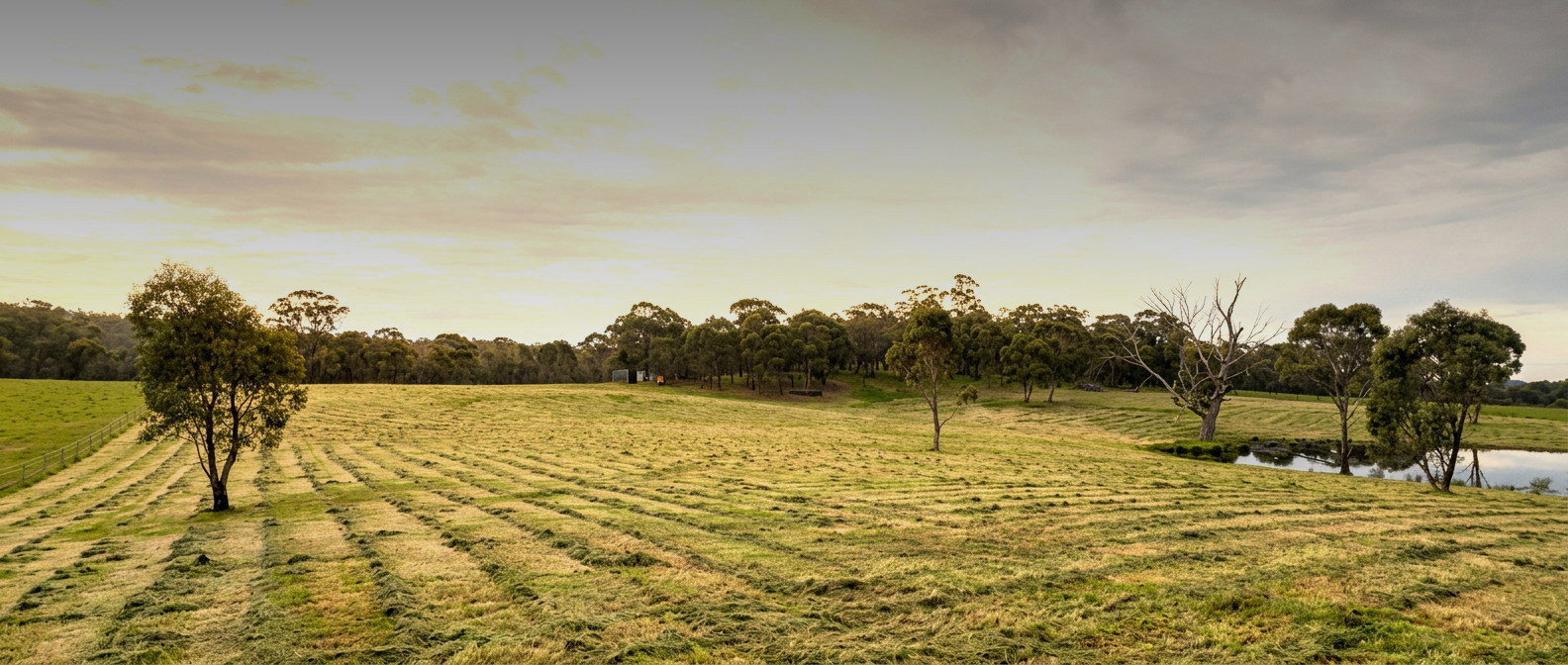
Acreage Slashing.
What This Means
Long grass and overgrowth cut back across paddocks, acreage and commercial grounds.
Acreage slashing cuts long grass and non-woody weeds across open paddocks, larger rural properties, laneways and vacant land. The cutting height and finish are agreed around the property's use.
We're set up for larger jobs — open paddocks and acreage, not residential yards.
Best done before grass cures off in late spring. Once it is dry and standing, it is fuel, and it hides snakes, rubbish and holes.
One-off cuts or a repeat visit through the season, whatever the property needs.
We cut around sheds, tanks, fence lines, culverts and driveways, not just the open middle, because that is where a fire actually gets a hold. Rough ground, stumps, rocks and hidden rubbish are all worked around, and we will tell you on the walk-through if part of the property is better mulched than slashed.
For rural land we can set the height to suit pasture, horse paddocks or hay country. For vacant land we cut lower for a tidy finish and to meet council fire-prevention standards.
We also take on roadsides, powerline and pipeline easements, rail and fence corridors, and other access strips, regular contract runs or one-off clears to keep access open and fuel down.
The Challenge
Rough Ground. Hidden Hazards.
Slashing is judged by what sits under the grass and the conditions on the day. These are the factors that determine how a paddock gets cut.
- 01
Concealed Rocks and Debris
Rocks and rubbish in long grass are invisible until the machine reaches them. Rough paddocks are cut higher, with blades kept clear of doubtful ground — a struck object can be thrown a considerable distance.
- 02
Wet Ground Conditions
Cutting saturated country damages the paddock and slows the work. Cutting is scheduled around dry windows, when the ground will carry a machine.
- 03
Cured Grass Near Structures
Dry grass against houses and sheds is a fire hazard. Asset protection zones are cut first, then the remainder of the paddock.
- 04
Uneven and Worn Paddocks
Ridges, ruts and worn corners require machinery suited to rough ground, and a slower pace where conditions demand it.
- 05
Restricted Access
Gate widths, laneways and turning room are confirmed at the site visit, so equipment is sized to the access before work begins.
Solutions
What we can do for you.
We supply the right machinery for the job. You tell us what the land needs, we work out the method.
Paddock Slashing
Long grass across open paddocks cut back before it cures off.
Commercial Grounds
Workplaces, facilities and managed sites on regular cuts.
Roadsides & Easements
Verges, laneways and corridors kept open.
Fire Prevention Cuts
Grass cut to the height set on a council notice.
Seasonal Programs
Repeat cuts planned around growth and the season.
Council & Contract Slashing
Large reserves, roadsides and multi-site programs slashed under council or contractor scope.
Machinery
Choosing the right machinery for the job.
Machinery selection is based on the vegetation, site access and the finish agreed with you.
Our experienced operators use machinery and attachments suited to the work. We assess the site and confirm the equipment and method before work begins.
Tractors
Heavy-duty slashers
Tracked skid steers for rough ground
One-off cuts or scheduled slashing.
The cut and schedule are agreed for your property.
- 01Acreage slashing: long grass across open paddocks and larger rural properties.
- 02Commercial slashing: accessible acreage and open grounds around managed sites.
- 03Regular cuts: visits planned around growth, weather and site access.
- 04One-off slashing: long grass cut back within the agreed work area.
If Left Unchecked
What another year costs you.
Most people put this work off one more season. Here's what actually happens when you do, straight, no fearmongering.
Read the full breakdown →- 01Cured grass over 10cm is flash fuel, a grass fire in 30°C+ heat moves at running pace and throws embers hundreds of metres.
- 02Long grass against a shed, fence or house gives a fire a direct path to your structures.
- 03Snakes shelter in long grass through summer. Kids, dogs and stock all walk through it.
- 04Failure to comply with a fire prevention notice can lead to enforcement and recovery of compulsory-work costs. Confirm the required work with the issuing officer.
What should I remove or mark before slashing?
Identify wire, rubbish, irrigation, stumps, rocks, holes and other hazards within the work area. Arrange stock movements and agree safe access and exclusion areas. Long grass can conceal hazards, so a site inspection does not guarantee every obstruction is visible.
How often should paddocks be slashed?
Frequency depends on grass growth, rainfall, pasture use and any notice or maintenance requirements. Inspect before fire season and after further growth, then plan repeat cuts where needed. There is no fixed number of visits that suits every property.
How short do you cut?
Cutting height is agreed for the property's use, vegetation and achievable finish. For a fire prevention notice, the notice's specific height, work area and conditions take priority over a general recommendation. Slashing reduces grass height; cut material remains combustible when dry and no cut guarantees fire safety.
Can you slash properties that haven't been touched in years?
Long grass and non-woody weeds can be slashed where access and ground conditions allow. Saplings, woody scrub and blackberry need brushcutting or forestry mulching rather than grass slashing. We assess the growth on-site and agree the right method before work starts.
Do you do small residential yards?
We're set up for larger jobs. The machine and the setup are built for open paddocks, acreage and bigger properties, not residential yards. If your job measures in hectares rather than house yards, we're the right fit.
Do you offer regular slashing plans through summer?
Yes. Scheduled slashing is planned around growth, access and the site's requirements. Visit frequency is reviewed as conditions change. Fire restrictions and unsafe conditions can require a booking to be rescheduled.
Will you slash if the council has issued me a fire prevention notice?
Yes. Send every page of the notice and any marked plan so we can assess the required work and deadline. Separate approvals must be confirmed before clearing. Job records describe the work completed; council determines whether its notice has been satisfied.
Do you slash roadsides and powerline easements?
Yes. We slash and clear roadside verges, powerline and pipeline easements, and other access corridors, one-off clears or scheduled runs. For anything within reach of live powerlines we work to the utility's clearance requirements, and if the job needs a specialist line-clearance crew we'll tell you straight.
How much does slashing cost?
It depends on the area, how thick the growth is and how easy the access is, so we don't quote sight unseen. We visit the property, assess the work, and put the price in writing before anything starts.
When's the best time to slash for fire season?
Plan before grass cures and allow time for site assessment, any approvals and weather delays. Timing depends on the season and the property, not a fixed October or December deadline. Follow the deadline on any council notice and check current CFA restrictions before machinery work.
Do I need to be home when you slash?
No. As long as we've walked the property together first and the gates are sorted, we can do the job while you're at work. We lock up how we found it and let you know when it's done.
Do you spray weeds as well?
Not yet. Commercial weed spraying needs a Commercial Operator Licence (COL) from Agriculture Victoria and Ironbark is arranging it now — spraying starts once the licence is in hand. Mechanical clearing and slashing are available today, and chemical follow-up can be arranged with a licensed contractor in the meantime.
Ready to get started?
Tell us what the job involves. We'll visit the site, assess the work and provide a written quote, with no obligation.