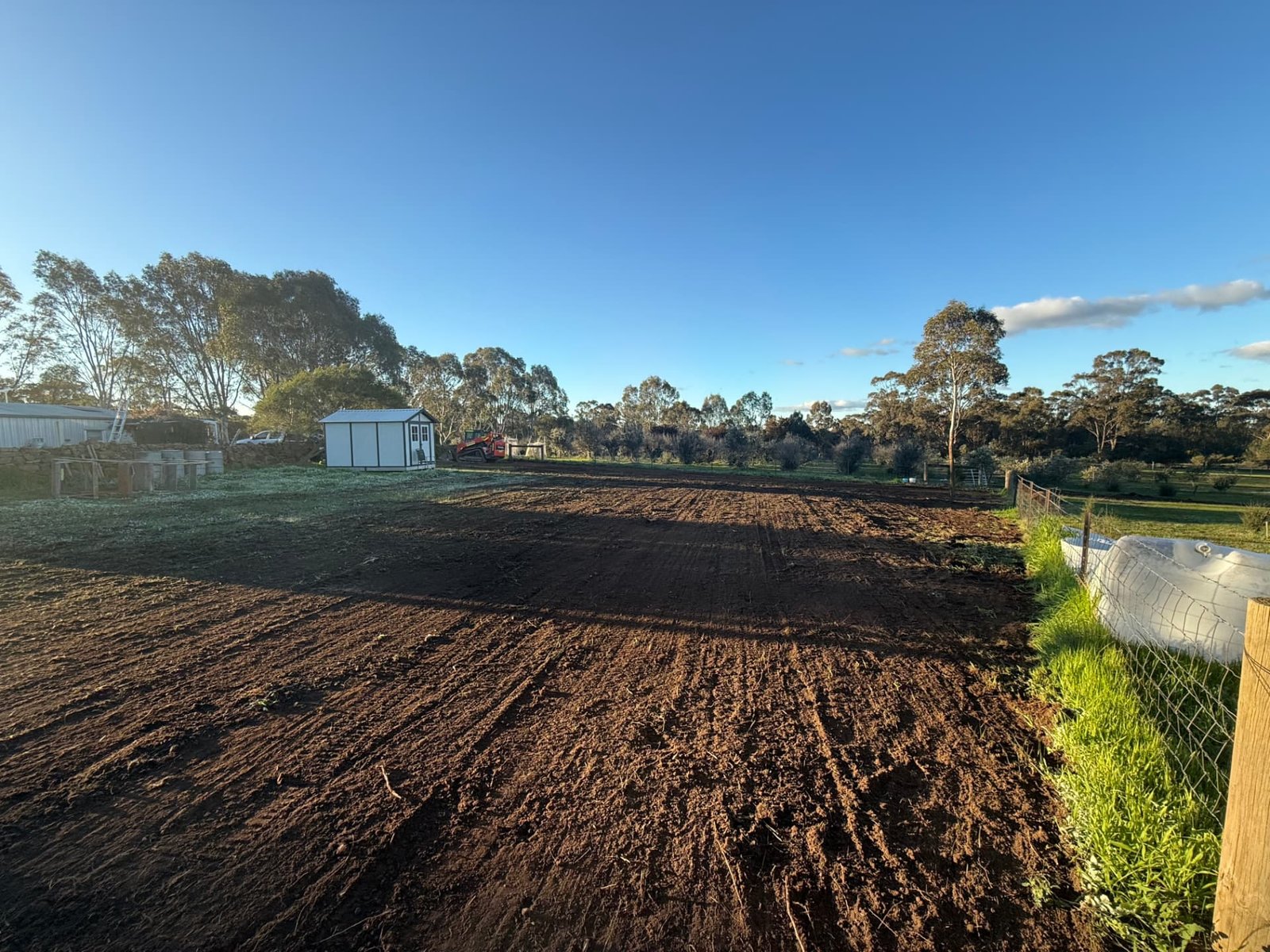
Land Reclamation.
What This Means
Below-ground processing for land where surface clearing is not enough.
A property can look cleared and still be full of stumps, roots and buried timber. Subsoil mulching takes the work below ground, processing woody material within the agreed working area and mixing it into the ground rather than leaving every obstruction in place.
Unlike forestry mulching, which cuts standing vegetation and leaves mulch on top, subsoil mulching works beneath the surface with purpose-built equipment. It targets woody material that can get in the way of pasture renewal, replanting and ongoing property maintenance. It can be booked on its own where suitable, or assessed after surface clearing; neither service is automatically included in the other.
It suits land where the aim is more than cutting the scrub back: reclaiming previously wooded areas, dealing with old stump-filled ground or preparing cleared land for its next use. It is not automatically the right choice for every property. If surface mulching will achieve what you need, we will tell you.
Processing timber in place can reduce the amount of material needing to be stacked, burnt or carted away. The wood stays as organic material that breaks down over time. That does not mean instant pasture, guaranteed higher yields or a finished building site; the next steps depend on what you want to do with the land.
We are based in Bendigo, covering Central Victoria and Victoria-wide for larger-scale projects. Every job starts with a site visit, an agreed finish and a written scope before work begins.
The Challenge
Below-Ground Processing For Unusable Land.
Ground carrying old stumps is the hardest land to return to use, and not all of it suits subsoil work. That assessment happens on the ground, before any commitment is made.
- 01
Concealed Stumps and Root Systems
Once topsoil has grown over old clearing, the timber beneath is invisible. Subsoil processing locates and processes it below the surface, rather than leaving the ground unusable.
- 02
Saturated Ground Exclusions
Wet country cannot take subsoil treatment. Work waits for a dry window, or the answer is no — processing saturated ground causes more damage than leaving it.
- 03
Rock and Debris at Depth
Old clearing leaves stone and debris below the surface. The work is assessed against what is actually in the ground, and unsuitable country is identified before work begins.
- 04
Soil Profile Restoration
Working ground without a plan leaves it worse. The finish is matched to the next use — returned to pasture, replanted, or left ready for what follows.
Solutions
What we can do for you.
We supply the right machinery for the job. You tell us what the land needs, we work out the method.
Subsoil Mulching
Stumps, roots and buried timber processed below the surface.
Stump-Filled Ground
Old cleared land with stumps still in it brought back into use.
Pasture Renewal Prep
Ground prepared so it can be sown again.
Old Plantation Conversion
Former plantation land returned to grazing or cropping.
Replanting Prep
Ground readied for new plantings.
Land Regeneration
Overgrown country turned back into ground you can use.
Large-Scale Reclamation
Broad areas of old cleared or plantation country brought back into production.
Machinery
Choosing the right machinery for the job.
Machinery selection is based on the vegetation, site access and the finish agreed with you.
Our experienced operators use machinery and attachments suited to the work. We assess the site and confirm the equipment and method before work begins.
Tractors
Subsoil mulchers
Tracked skid steers
Surface mulching heads
A deeper clear. A better starting point.
Choose the method around what the land needs to become, not just how it looks when the scrub is gone.
- 01Pasture renewal: process woody obstructions in the agreed area so follow-up preparation and sowing can be planned.
- 02Replanting: reclaim previously cleared land for a new planting plan where below-ground timber is in the way.
- 03Old clearing sites: deal with remaining stumps and roots that surface mulching leaves behind, within the agreed depth and equipment limits.
- 04Ongoing maintenance: reduce targeted woody obstructions that interfere with later slashing or land management. The final finish is agreed on-site.
From the first walk-through to the handover.
The intended use, working area and limits are agreed before the machine starts.
- 01Walk the property: tell us whether the goal is pasture, replanting or reclaiming overgrown land. We inspect access and the extent of the woody material.
- 02Mark the boundaries: identify retained trees, fences, waterways and no-go areas. Confirm approvals and locate underground services, including private pipes and irrigation.
- 03Set the scope: agree surface clearing, the below-ground treatment area, achievable working depth, finish, material handling and anything excluded. You receive it in writing.
- 04Carry out the work: clear surface growth where needed, then process suitable stumps, roots and buried wood within the agreed area. Hidden hazards or scope changes are discussed before extra work proceeds.
- 05Walk the result: review the finish together and discuss settling, regrowth monitoring and any further preparation needed before sowing, grazing or planting.
Choose the right level of clearing.
More intensive work is worthwhile only when it gets you closer to the result you actually need.
- 01Forestry mulching: usually the better fit for reducing standing scrub and regrowth while leaving roots and the ground largely undisturbed.
- 02Subsoil mulching: worth assessing where stumps, roots or embedded timber prevent the planned use of already cleared land.
- 03Scattered stumps left after a clearing job: stump grinding is usually the sensible option, and it's a separate service to whole-area subsoil treatment.
- 04Construction: this service is not excavation, cut and fill, pad construction, compaction or engineering certification. Building areas need separate assessment and preparation.
Before You Decide
What to know before going below ground.
A deeper treatment changes the ground as well as the vegetation. These limits matter when choosing the service.
Arrange a site visit →- 01Working depth and the size of material that can be processed depend on the equipment and the property. There is no blanket depth promise or guarantee that every root will be removed.
- 02Buried wire, metal, rubble, pipes and cables must be identified. Before You Dig Australia plans are a starting point, not proof that private services are absent or safely located.
- 03Below-ground work can damage the roots of trees you want kept and disturb sensitive areas. Tree protection zones and any approval conditions must be respected.
- 04Disturbed ground and decomposing wood can settle. Regrowth and weeds may return, and further preparation may be needed before the land is ready for its intended use.
Is subsoil work automatically included after forestry mulching?
No. Forestry mulching and subsoil work have separate agreed scopes and written quotes. Either may be booked on its own where suitable. Below-ground treatment is assessed only when the intended land use warrants it.
How do you manage concealed wire and private irrigation?
Provide service plans and known locations of buried wire, irrigation and other infrastructure. Before You Dig plans do not show every private asset. Additional locating or safe isolation may be required; work stops in an affected area until hazards and any scope changes are resolved.
What is subsoil mulching?
It is below-ground processing of suitable stumps, roots and embedded woody material using purpose-built equipment. The processed material is mixed into the ground within the agreed working area. It is different from surface forestry mulching, which mainly cuts standing vegetation and leaves mulch on top.
Is subsoil mulching the same as ripping or subsoiling?
No. Ripping or subsoiling loosens ground with tines; it does not grind woody material in the same way. Subsoil mulching processes wood beneath the surface. We agree the method around your intended use rather than treating these as interchangeable services.
How deep can you mulch, and will every stump and root be gone?
There is no fixed depth that applies to every job. Access, obstructions, stump size and the equipment suited to the property all matter. We confirm an achievable working depth and finish on-site. Roots below that depth or outside the treatment area can remain, and some material may need another method.
Is this the best option for my property?
It is worth considering when below-ground woody material is stopping you using already cleared land. If your goal is simply scrub control, fire preparation or opening up access, surface mulching may be enough. We compare the options on the walk-through and scope only the work you need.
Will it stop blackberry, gorse and other weeds coming back?
Not permanently. Seeds, surviving roots and plants outside the treatment area can cause regrowth. Land reclamation needs a follow-up plan, including monitoring and appropriate weed control before new growth gets established.
Can I sow pasture or graze immediately afterwards?
Do not assume that. The worked area needs to be checked for remaining wood, uneven ground and settling. A suitable sowing and pasture establishment plan may require further preparation and agronomic advice. Timing for stock depends on safe ground conditions and established pasture, not just completion of the mulching.
Does mixing wood into the ground improve it?
It adds organic material that breaks down over time, but the result depends on the amount of wood and the intended land use. Fresh woody material can temporarily tie up available nitrogen while it decomposes. We do not promise instant fertility or increased yields; seek agronomic advice for pasture or crop establishment.
Can you work close to trees, fences or underground services?
Only within safe, agreed limits. Trees to be retained need protected root areas, and fences and services need clear exclusion zones. Provide service plans and details of private water lines, irrigation, septic systems and buried cables. Additional locating may be needed before below-ground work can proceed.
Do I need permission for land reclamation in Victoria?
A planning permit may be needed to remove, destroy or damage native vegetation, including through root disturbance. Overlays and other approval requirements may also apply. Check with your council before work is booked and provide any permits or written confirmation of an applicable exemption. Calling it reclamation does not make clearing exempt.
Will the result be ready for a shed, house or driveway?
No. Mulching is not engineered site preparation. Mixed-in organic material can decompose and settle, so construction areas need separate professional assessment and preparation. General earthworks, pad construction and driveway grading are not part of this service.
What affects the quote and how long the work takes?
The treatment area, access, surface vegetation, amount and size of buried timber, required working depth, hidden obstructions and intended finish all affect the job. We assess these in person and put the scope and price in writing. No quotes over the phone.
What should I send to arrange a site visit?
Send the property address, approximate area, photos, what has already been cleared and what you want to use the land for. Include any permits and known underground services. Call 0456 236 034 or use our contact form to arrange a walk-through.
Ready to get started?
Tell us what the job involves. We'll visit the site, assess the work and provide a written quote, with no obligation.