The Seasonal Planning Calendar

    Timings here are written for the Bendigo district and the surrounding shires. Fire restrictions are declared council by council and shift every year, so the dates below are a planning guide rather than fixed rules.

    See It By Industry

    January

    Peak dry — keep to the surface

    Pasture has dried off, the ground is hard and bare patches are exposed. Fire danger is at its highest and the Fire Danger Period is normally in force across the district.

    Plan ahead for

    Book the post-harvest and autumn windows now. March to May fills quickly once harvest is through and the ground softens.

    Watch out for

    Hot works such as grinding or cutting are restricted during the Fire Danger Period and stop completely on Total Fire Ban days.

    By industry

    The same year, sector by sector.

    Agriculture & Acreage

    Work is driven by the cropping calendar: the first cut before annual weeds set seed, then the post-harvest window before winter.

    Aug - Sep

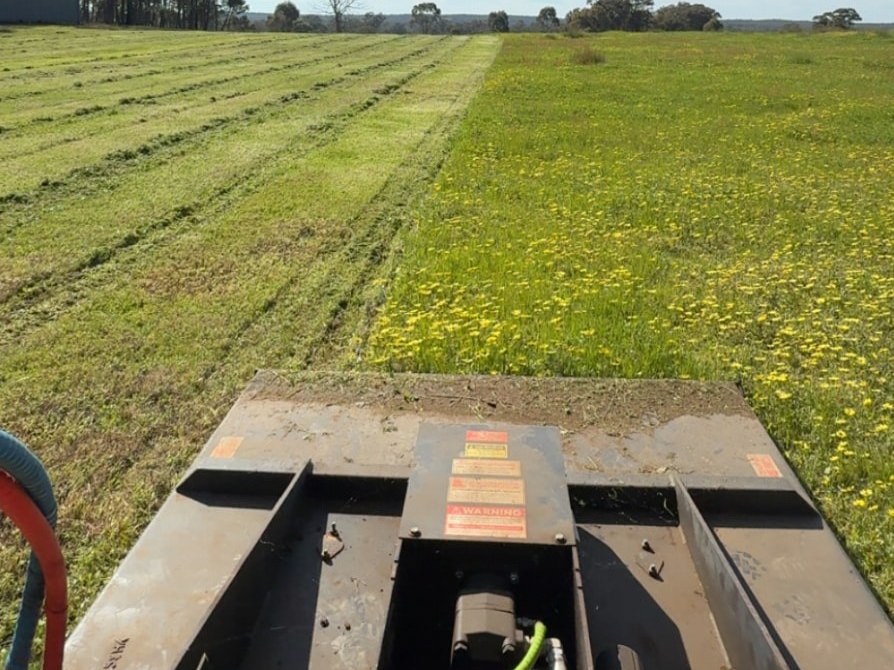
    Slash annual grasses before seed heads form, with a follow-up four to six weeks later.

    Apr - Jun

    Clearing, mulching and reclamation on ground that is workable but no longer wet.

    Oct - Nov

    Fire breaks and access trails finished before the Fire Danger Period is declared.

    The fixed constraints

    What actually sets the dates.

    Fire Danger Period

    The CFA declares the Fire Danger Period for each municipality, and the start and finish dates change every year with rainfall and grass curing. Open-air burning needs a Permit to Burn while it is in force, and hot works such as grinding or cutting are restricted.

    Country Fire Authority(opens in a new tab)

    Registering a burn-off

    Outside the Fire Danger Period, a burn-off still has to be registered before it is lit. Fire Permits Victoria handles applications and registrations, and council local laws can add further conditions.

    Fire Permits Victoria(opens in a new tab)

    Total Fire Ban days

    Total Fire Bans are declared for a fire ban district or the whole state on days when fire would spread quickly. Hot works stop outright on these days unless a permit has been issued for essential work that cannot be delayed.

    Country Fire Authority(opens in a new tab)

    Native vegetation

    A permit is usually required to remove, destroy or lop native vegetation, and the rules are set through the planning scheme. Introduced and non-native vegetation is treated differently — the check happens before anything is cut.

    Victorian Government(opens in a new tab)

    Wildlife breeding season

    Native wildlife is protected under the Wildlife Act. State guidance is to check for nests, hollows and burrows before works, and to avoid activities that impact vegetation during spring, when wildlife is likely to be breeding.

    Victorian Government(opens in a new tab)

    Wet ground and compaction

    Wet soils are the most at risk of compaction, clay soils in particular. Working ground that cannot carry the machine leaves a hard layer that restricts roots and water for years, which is why winter jobs wait on the weather.

    CCMA Knowledge Base(opens in a new tab)

    Pasture weed timing

    Broadleaf and grass weeds in pasture are targeted through autumn and winter to cut seed set before the following season's growth. A program that combines methods holds weeds back better than any single pass over the ground.

    Agriculture Victoria(opens in a new tab)

    This calendar is a planning aid written for Central Victoria. Restrictions, permit settings and seasonal conditions change, so confirm the current position for your council and your site before you book work.

    Check Permit Requirements

    Planning the year ahead?

    Tell us the address and what you want the land to do. We'll walk it, put the scope and timing in writing, and book the work for the window that suits.